HEAD-TO-HEAD
Property Works vs Leasecake
Service-based systems can reduce internal workload, but they often do so by removing access, insight, and ownership from the broader team.
CAPABILITY


Watch Demo
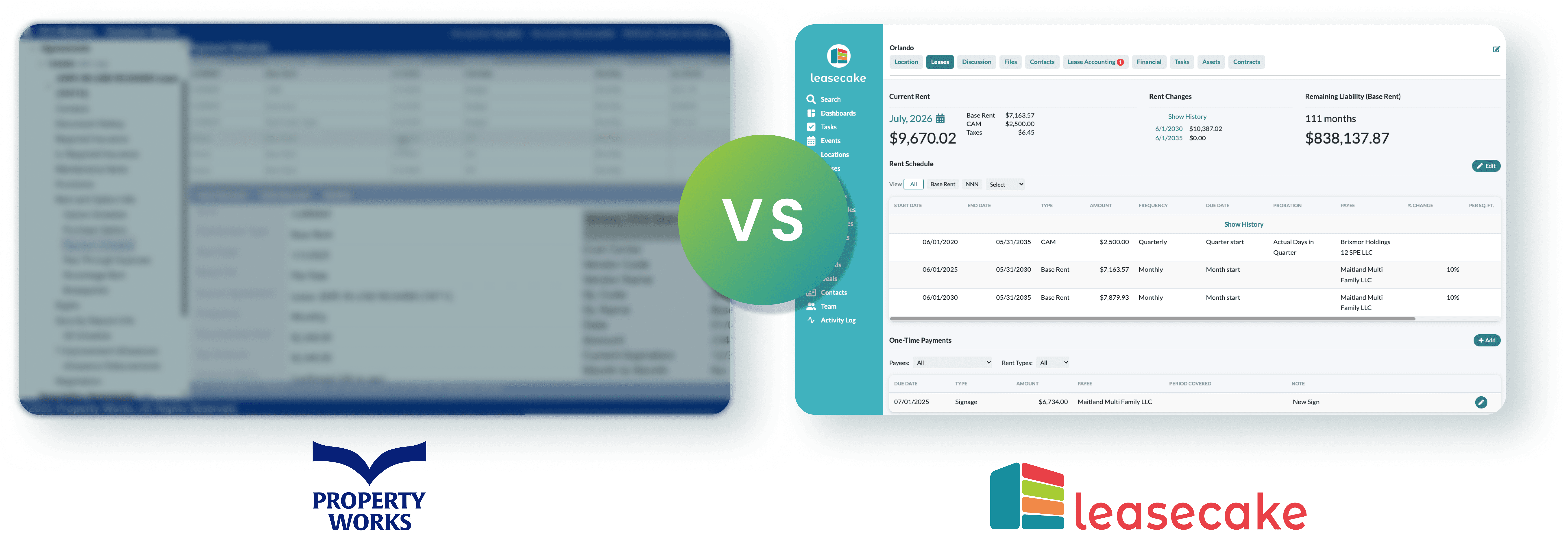

Why Leasecake wins
Systems with an outdated user experience like Property Works can make it harder to see problems early and control costs.
Direct visibility beats delegated control.
Property Works centralizes lease work through a service team. Leasecake keeps lease data accessible to real estate, accounting, and leadership so decisions are not delayed by requests or queues.
Risk surfaced early, not managed later.
Property Works focuses on administration after execution. Leasecake surfaces obligations, changes, and inconsistencies early so teams can act before risk compounds.
Modern automation, not manual mediation.
Property Works relies on people to manage updates and exceptions. Leasecake uses automation and AI to keep data current and highlight risk without requiring constant intervention.
Modern UX without sacrificing depth.
Leasecake’s interface reflects how lease administrators, finance teams, and leadership actually work. Clear navigation, logical data structure, and guided workflows reduce training time while supporting complex lease scenarios behind the scenes.
Property Works:
Common risk scenarios
When lease administration is handled by a service layer, visibility and control can drift further from the teams responsible for decisions.
How easy is it to switch from Property Works to Leasecake?
During a switch from Property Works, Leasecake ensures your lease data is structured, reviewed, and reliable before it ever powers accounting, reporting, or portfolio decisions.
Leasecake gives you:
A data accuracy guarantee you can rely on
AI-assisted abstraction paired with expert validation
No “clean it up later” phase after go-live
A single source of truth your teams can trust immediately

Evaluating Property Works?
Try asking these questions
Time in market doesn’t equal modernization. Today’s lease teams need intuitive, flexible platforms—not legacy architecture wrapped in service layers.